Need TV Repair Services in Nairobi?
Certified technicians dispatched to you — same day.
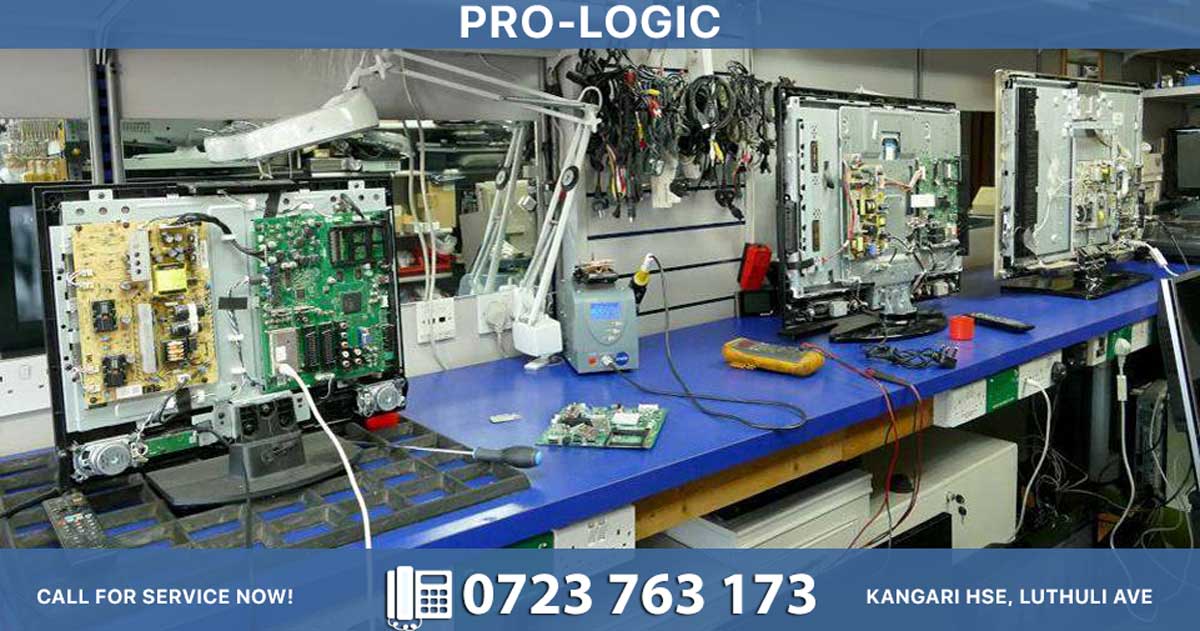
LCD screens are precision components made up of multiple layers — a backlight, liquid crystal panel, polarizers, and a glass substrate. Any of these can fail for a variety of reasons:
- Physical impact — A knock, fall, or pressure crack is the most common cause of screen failure. The damage often appears as a black ink-like blotch that spreads from the point of impact.
- Power surges — Voltage spikes can burn out the backlight or damage the T-con board, resulting in a dim, flickering, or completely black screen.
- Manufacturing defects — Dead pixels, stuck pixels, or discolouration that appear over time are sometimes the result of factory-level panel issues.
- Aging backlights — CCFL-backlit TVs (older models) gradually lose brightness, and the fluorescent tubes can fail entirely after years of use.
- Humidity and heat — Nairobi's varied climate, combined with poor ventilation around the TV unit, can accelerate internal component degradation.
Understanding the root cause matters because not every dark or distorted screen requires a full panel swap. Sometimes a faulty backlight inverter, a loose ribbon cable, or a failed T-con board is the culprit — and those are significantly cheaper to fix.
Diagnosing the Problem Before Replacing the Screen
A proper diagnosis should always precede any LCD screen replacement. A few checks can help narrow down the issue:
- Shine a torch at the screen — If you can faintly see an image, the LCD panel itself is likely fine, and only the backlight needs attention.
- Check for physical damage — Cracks, pressure marks, and spreading black patches almost always indicate a damaged panel that requires full replacement.
- Look for vertical or horizontal lines — These often point to a T-con board problem or a loose flat cable rather than a broken panel.
- Test with an external display — If your TV has an HDMI-out or a secondary input, testing the signal path can isolate whether the problem is in the panel or the main board.
Skipping this step and going straight to a screen swap when the actual fault lies elsewhere is a costly mistake that a skilled technician will help you avoid.