Need TV Repair Services in Nairobi?
Certified technicians dispatched to you — same day.
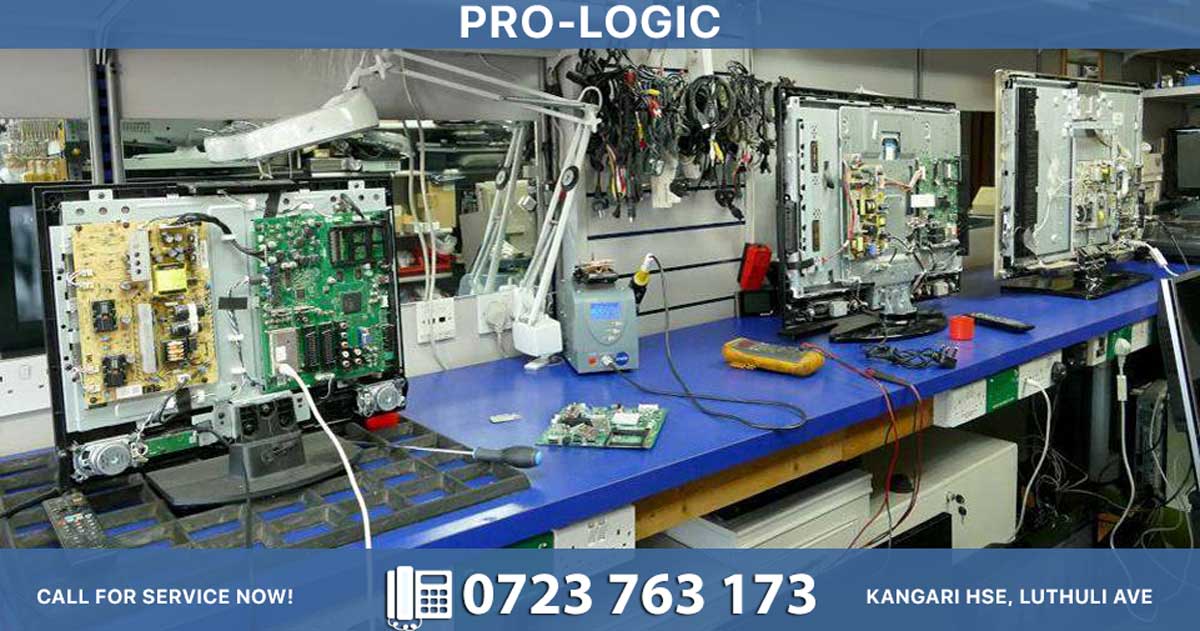
Repairing a TV power supply board yourself is possible, but it requires a solid understanding of electronics, soldering skills, and the ability to work safely with high voltages. The power supply board is one of the most critical components in a TV, as it provides the necessary voltages to all other parts of the set. A faulty power supply can cause a wide range of issues, including failure to turn on, random shutdowns, flickering, or dim screens. Attempting to repair the power supply board without proper knowledge and tools can be dangerous and may result in further damage to the TV or even personal injury.
The first step in diagnosing a power supply issue is to visually inspect the board for obvious signs of damage. Common indicators of a failing power supply include bulging or leaking capacitors, burn marks, or a burning smell. Capacitors are cylindrical components with two legs, and they often fail due to age, heat, or poor quality. If you see any capacitors with bulging tops or leaking electrolyte, they should be replaced. Other components, such as resistors, diodes, or transistors, can also fail and may need replacement.
To replace a faulty capacitor or other component, you will need a soldering iron, solder, desoldering braid or a pump, and replacement parts. The replacement parts must match the original components in terms of value, voltage rating, and physical size. For capacitors, this information is usually printed on the component. For other parts, you may need to refer to a schematic or service manual for the TV. These documents are not always readily available to consumers, so you may need to source them from repair forums or the manufacturer.
Start by disconnecting the TV from power and removing the back cover. Ground yourself to avoid static discharge, which can damage sensitive components. Locate the power supply board, which is usually near the power input and has multiple capacitors, transformers, and heat sinks. Identify the faulty component and desolder it from the board. Use the soldering iron to heat the solder joints and remove the component with tweezers. Clean the solder pads using desoldering braid or a pump to remove any remaining solder.
Solder the new component into place, ensuring it is oriented correctly. For capacitors, the negative leg is usually marked with a stripe or a minus sign. Use a small amount of solder and avoid creating bridges between adjacent pads. Once the new component is installed, inspect the solder joints to ensure they are smooth and shiny. Reassemble the TV and test the power supply. If the TV powers on and functions normally, the repair was successful. If not, recheck your work and look for other faulty components.
While replacing a single component can be straightforward, diagnosing the root cause of a power supply issue can be more challenging. Some problems, such as short circuits or failed traces, require advanced troubleshooting and specialized equipment, such as a multimeter or oscilloscope. If you are not confident in your ability to diagnose and repair the power supply board, it is best to seek professional help. Additionally, if the TV is still under warranty, attempting this repair will likely void the warranty, so contact the manufacturer for service instead.
Safety is paramount when working with power supply boards. The power supply contains high-voltage components that can retain a charge even when the TV is unplugged. Always discharge capacitors before working on the board, and avoid touching any components or traces while the board is powered. If you are unsure about any aspect of the repair, do not proceed and consult a professional technician instead.